Daily Weather Alarm - Radar
- 3.0
- Rating
- 100.00K
- Installs
- Free
- Price
 Analysis by App-foxy
I judge a weather app less by how many screens it can fill and more by whether it helps me make a small decision at the right moment: take a jacket, move a walk, or leave a little earlier. Daily Weather Alarm - Radar is a free weather app from X5 Network Area, and its name points toward a practical daily routine rather than a specialist forecasting tool. My main impression is that it is worth considering if you want weather checks to fit into your day, but I would not choose it on the assumption that the word “Radar” guarantees a particular level of map detail.
What free access means in practice
The app is free to download, which makes trying it a low-commitment way to see whether its approach suits you. That is the clearest value point: you can decide from your own routine whether a daily weather assistant earns a place on your phone without weighing a stated purchase price. I would treat free access as a reason to test it, not as proof that it is automatically a better choice than other weather apps.
Its current version is 1.4.0, and it has reached over 100,000 installs. The average rating is 3.0 from around 300 ratings, a mixed reception that makes it sensible to approach with measured expectations. Those figures do not tell me what each person liked or disliked, but they do suggest that the app has found an audience without standing out as a universally praised pick.
You May Also Like

 AccuWeather: Weather Radar
AccuWeather Review: A Quick, Clear Forecast for Everyday Decisions
For everyday plans, the best forecast is the one you can understand quickly. AccuWeather makes rain timing, radar, and local conditions easy to act on, with a few trade-offs.

 Hill Climb Racing
Why Hill Climb Racing Still Turns Crashes Into One More Run
A tiny car, a bumpy hill and one more upgrade: Hill Climb Racing keeps resurfacing because its simple chaos makes every near-miss feel personal.

 AliExpress - Shopping App
AliExpress Makes Global Shopping Feel Personal, but Shoppers Bear the Risk
AliExpress turns a global marketplace into a pocket-sized discovery engine. Its reach is useful, its shopping loop compelling, and its trade-offs easy to miss.

 Lords Mobile: Kingdom Wars
Lords Mobile Is a Kingdom-Building Routine, Not a Quick Match
A case-by-case verdict on the building, battles, device demands, and social commitments that make Lords Mobile rewarding for some players and exhausting for others.

 PDF Scanner app - TapScanner
TapScanner Makes Paperwork Easier to Capture, Check, and Share
TapScanner makes scanning with a phone feel less like a rescue operation and more like a dependable step in getting work done. Its capture tools are useful, though not flawless.

 Block Blast!
 Shows How Much a Puzzle Game Can Leave Out
A quiet grid game shows why puzzle players increasingly value instant clarity, repeatable skill and low-pressure play—and where the genre still needs to catch up.
More From Our News Desk
View All News


The app is rated for Everyone and supports devices running Android 8.0 or later. That makes it a possible option for people using an older compatible phone, as well as for those who want a straightforward weather utility rather than a demanding game or a specialised professional tool. It was released on August 7, 2026, so its store availability is relatively recent; I would give particular weight to how well it behaves on your own device rather than assuming a long track record.
There is an important distinction between being free to install and knowing every detail of the cost model. I would not infer from the free price alone that every possible part of the experience is permanently free or that there are no optional purchases. If you are strict about avoiding any paid extras, check the app store’s purchase information before making it part of your routine. For someone simply looking for a no-cost weather app to try, though, the entry point is clear.
Where its daily focus can help
The most useful way to judge this app is by the job implied by “Daily Weather Alarm”: helping you connect weather awareness with the day ahead. That framing is more appealing to someone who checks conditions while getting ready than to a person who enjoys exploring forecast charts. A weather check becomes more valuable when it changes a decision, and a morning routine is a natural place for that decision to happen.
Picture a weekday when you need to walk to a bus stop, then spend much of the day indoors. You do not need a deep meteorological briefing; you need a quick sense of whether to bring an umbrella or choose warmer clothing. A daily-oriented weather app can be useful in that moment because it encourages a repeatable check before you leave, rather than waiting until the weather has already disrupted your plans.
There is a less obvious workflow worth trying: use the app as a prompt to make a plan, not as a reason to keep refreshing a forecast. Check it once while preparing for the day, decide what you will carry, and check again only if your plans change or conditions look uncertain. That approach can make a lightweight weather companion more useful than a feature-packed app that invites constant scrolling.
Another practical tip is to compare the forecast with what you observe over several ordinary days before relying on it for a time-sensitive outdoor plan. A forecast that feels useful for deciding on a coat may not be enough for a long hike, a commute with several exposed stretches, or an event where rain timing matters. Keeping those decisions separate helps you avoid expecting a daily assistant to serve as a specialist forecasting service.
Radar expectations and everyday tradeoffs
The “Radar” part of the name may attract people who want to watch rain moving across a map. I would be careful not to treat the name alone as a guarantee of particular radar controls, update intervals, map layers, or coverage. If radar detail is the reason you are choosing an app, verify that the actual map view meets your needs before depending on it. Someone who only wants a quick daily check may care much less about those distinctions.
That is the central tradeoff: a focused daily habit is convenient, while a specialist weather tool is often a better fit for people who need to investigate conditions in depth. A general forecast app may be easier for comparing several locations or examining longer-range outlooks, while a radar-focused alternative may suit someone tracking a storm in real time. I would keep a second trusted source available for unusual or high-stakes weather rather than asking one everyday app to answer every question.
Weather decisions also depend on location and timing. If you travel between neighbourhoods, work outdoors, or need to know whether a shower will reach a particular route, a broad daily summary may not be enough. My practical advice is to check the location displayed in the app and make sure it matches where you will actually be. That simple habit prevents a forecast for home from quietly becoming a forecast for an entirely different part of the day.
The rating gives another reason to test rather than assume. A 3.0 average is neither a clear endorsement nor a reason to dismiss the app outright; weather apps can feel very different depending on a person’s location, phone, and expectations. I would pay attention to whether the information is easy to find and whether the routine feels dependable on your own device. If the experience creates more doubt than confidence, there is little reason to keep it merely because it costs nothing to install.
Who is likely to get useful value
I can see this being a reasonable fit for someone who wants a simple daily weather companion and is comfortable judging it through ordinary use. It may also suit a person who prefers a recurring morning check over opening a weather app only when clouds appear. Since it is free to download, a brief trial can answer the most important personal question: does its approach help you make your day easier?
It is less compelling for a user who needs precise storm monitoring, detailed outdoor planning, or a broad collection of advanced forecast tools. In those situations, I would compare it with a dedicated radar or forecasting app and choose the one that visibly provides the information you need. The same goes for anyone who expects the app’s name to promise a specific alarm schedule or radar feature: confirm the available controls in the app itself instead of building a routine around an assumption.
For a household, it can be useful to treat the weather check as a shared decision rather than a definitive instruction. One person can check before leaving, then tell everyone whether a coat or umbrella seems sensible. If the day involves a long drive or outdoor work, that quick check should be a starting point, not the only source of information. This is a small but meaningful distinction between everyday convenience and planning that carries greater consequences.
The app comes from X5 Network Area, and its category is weather. That straightforward positioning makes it easy to understand what kind of utility it aims to be, but it does not tell me how well it will match every person’s preferred level of detail. The best test is not whether it can replace every weather tool on your phone; it is whether it handles the modest task you actually want it for without adding friction.
My buy-or-skip verdict
I would try Daily Weather Alarm - Radar if I wanted a free app to support a simple morning weather habit and was willing to check whether its actual screens fit my routine. The clear advantage is the low commitment of a free download; the more cautious side of the decision comes from its mixed average rating and the need to verify that the radar experience matches what the name leads you to expect.
I would skip it in favour of a more specialised alternative if my plans depended on detailed radar interpretation, extensive forecast options, or close monitoring of changing conditions. I would also avoid relying on it as my only source when weather could affect safety or a tightly scheduled outdoor activity. In those cases, the better choice is the app that clearly exposes the specific information and controls you need.
For an everyday user, my recommendation is modest but positive: give it a fair trial as a daily helper, keep expectations tied to the app’s real capabilities, and judge its usefulness by the decisions it improves. Free access makes that trial easy to justify, but convenience and trust are what determine whether it deserves a permanent spot on your phone.
FAQs for Daily Weather Alarm - Radar
01What does Daily Weather Alarm - Radar do?
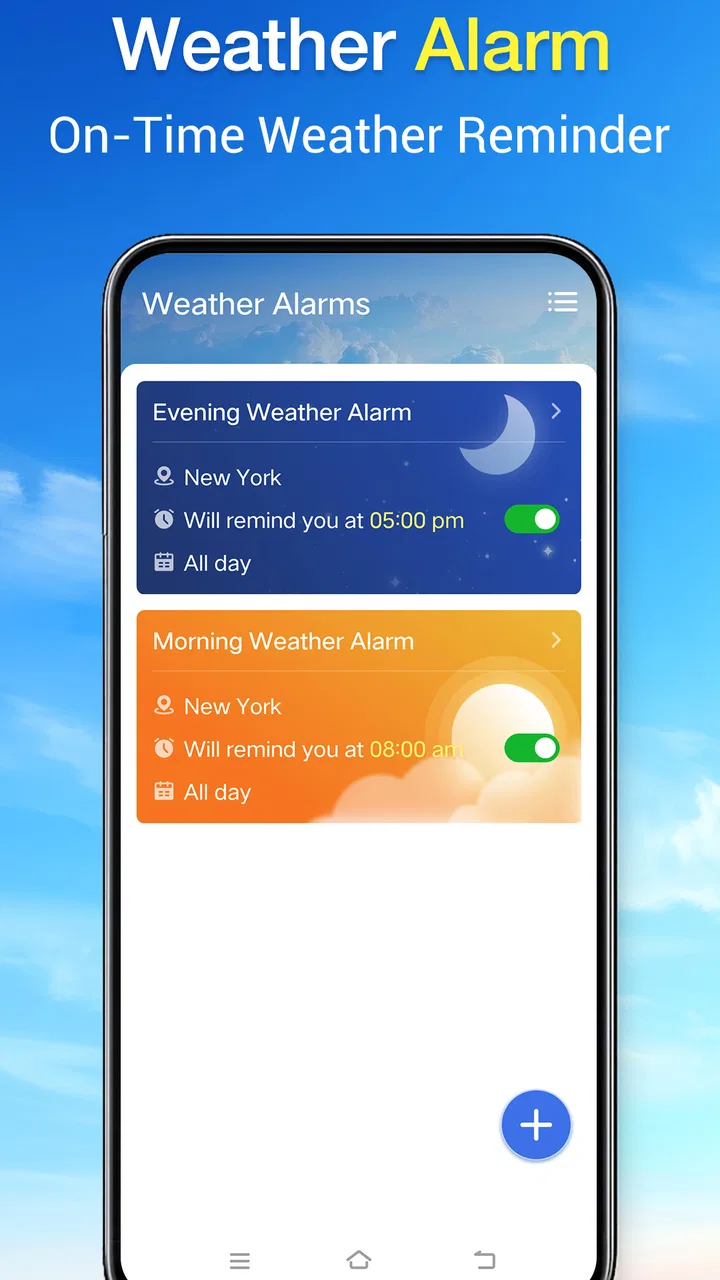
Daily Weather Alarm - Radar combines weather information with alarm features, helping you check conditions while planning when to wake up or get reminders. Its radar tools may let you view precipitation and other weather activity, while forecast screens can provide context for the day ahead. Available features and forecast details can vary by app version, location, and data provider, so check the current listing and in-app settings before relying on it.
02Does Daily Weather Alarm - Radar provide accurate local forecasts and radar?
Forecasts and radar imagery depend on your selected location, internet connection, and the weather-data providers used by the app. Like other weather services, it cannot guarantee exact conditions, especially for rapidly changing or highly localized weather. Enable location access or enter a place manually, and check that the displayed location and update time are correct. For severe-weather decisions, compare official alerts from your local weather authority rather than relying on one app alone.
03Can I use Daily Weather Alarm - Radar as my regular alarm clock?
The app’s name suggests weather-related alarm functionality, but the precise alarm options can differ between versions and devices. Before depending on it for an important wake-up, test the alarm and review its schedule, sound, snooze, and notification settings. Android and iOS may also restrict background activity or notifications when battery-saving features are enabled. Keep a separate backup alarm if missing a wake-up would cause a problem.
04Does Daily Weather Alarm - Radar require location access or an internet connection?
Current weather and radar generally require an internet connection, and location permission can help the app show conditions for where you are. You may be able to search for a city or set a location manually instead, depending on the available features. If you deny location access, some local functions may be limited. Review the permission prompt and the app’s privacy information to understand how location data is handled.
05Is Daily Weather Alarm - Radar free, and are there ads or in-app purchases?
Pricing, advertisements, and optional purchases can change over time and may differ by platform or region. Check the app’s Google Play or App Store listing for the current price, subscription terms, and in-app purchase details before downloading. If a trial or subscription is offered, review when billing begins and how to cancel through your store account. Also inspect the app’s privacy disclosures to see what data may be collected or shared.
Pros
- Weather alerts can help you prepare for changing conditions.
- Radar maps make precipitation patterns easier to follow.
- Daily forecasts provide a quick look at upcoming weather.
- Alarm features can help you plan around the forecast.
- A focused layout keeps weather details easy to find.
Cons
- Forecast accuracy can vary by location and provider.
- Radar data may be less useful in areas with sparse coverage.
- Frequent alerts can become distracting.
- Some features may require an internet connection.
- Battery use may rise if location access runs continuously.

Daily Weather Alarm - Radar
Gallery